
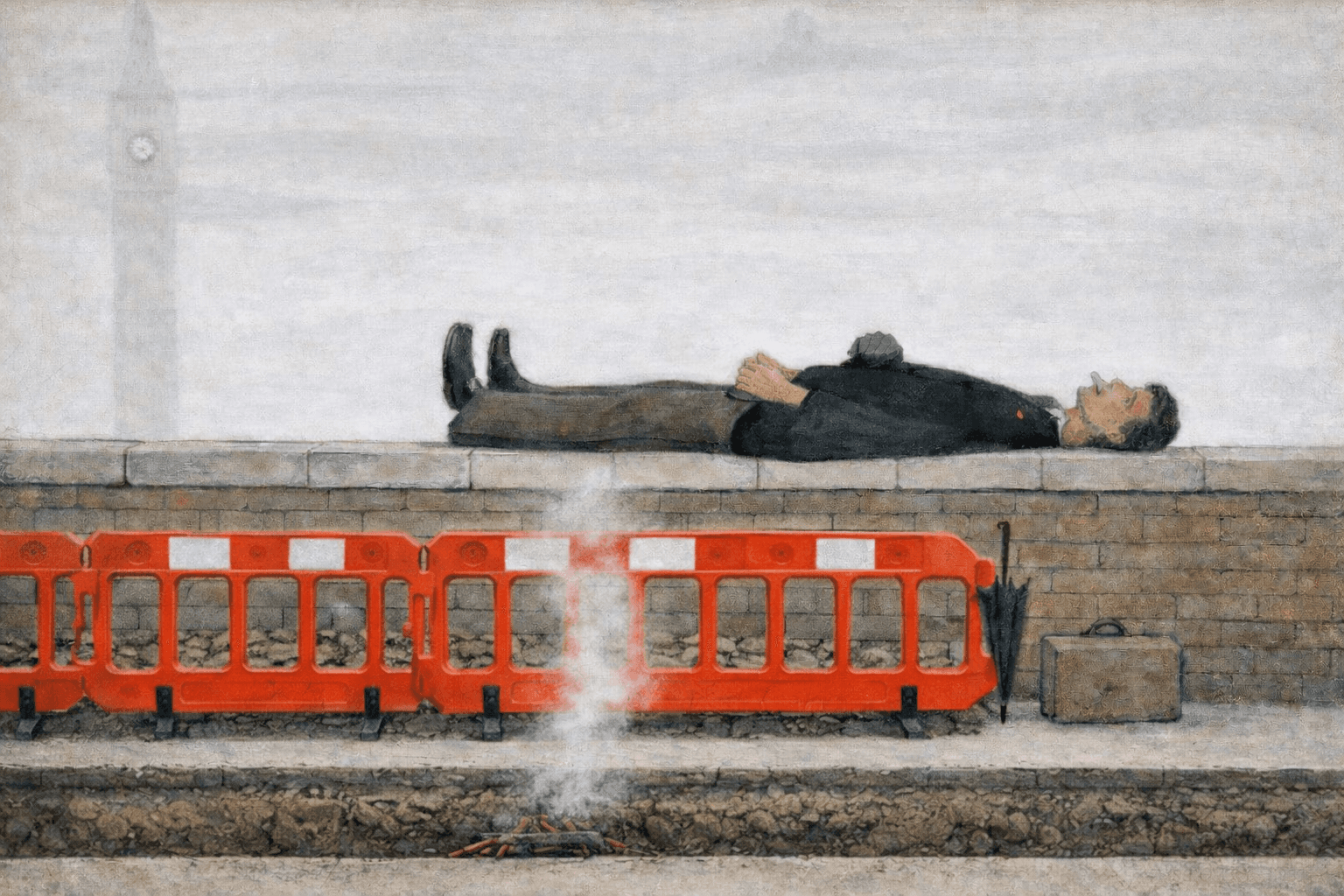
One of the quiet truths of energy is that the market always moves first and the regulator always arrives second. Not because regulators are sluggish or uninterested, but because the physics of governance operates on a different timescale to the physics of commerce. Markets optimise for speed, regulators optimise for stability. In the rooftop sector, arguably more exposed to real-world pressures than any part of the energy system, now lives inside that gap.
This tension isn’t new, it runs through the entire history of electrification. Long before solar panels appeared on industrial estates and farm sheds, the same dynamic played out in a far simpler form, through a device that promised British households the one thing they lacked most: warmth.
In the 1950s and 60s, plug-in electric bar fires swept the country. Britain’s housing stock was barely insulated and families often lived behind a single pane of glass through winter. The bar fire was, in a sense, a democratic appliance; cheap, immediate and comforting. You bought one, plugged it in, and heat arrived. The problem was that millions of other people did the same thing at the exact same time every evening. Streets that had once carried only lighting loads now had vast currents running through cables never designed for the surge. Joints overheated, PILC cables failed under strain and transformers groaned under the collective demand. In some places, the electricity boards were forced to lay temporary cables across pavements just to keep homes supplied.
The behaviour changed overnight. The consequences came shortly after. Policy followed only when the pattern became impossible to ignore. By the late 1970s, the electricity boards had quietly admitted that they could not persuade the public to stop using the very devices that kept them warm. So they changed the system instead. Economy 7, launched in 1978, offered seven hours of cheap electricity after midnight and paired it with storage heaters designed to charge at night and release heat during the day. It was more than a tariff: it was an engineered response to years of winter evenings in which LV cables had been pushed to their limits. The market had taught the lesson, regulation simply gave it structure.
That pattern, behaviour first, governance later is precisely the pattern the rooftop sector has lived through for more than a decade.
The Feed-in Tariff boom created the first full-scale surge of rooftop solar in Britain. Practically overnight, demand exploded. Contractors grew from small local firms into national operators. Sales teams multiplied, training pipelines stretched. Documentation standards drifted under the weight of sheer volume. Commissioning practices varied by company, and sometimes by team within the same company. The market adapted in real time, because it had to. Standards were not built to update quarterly. Regulation could not possibly keep pace with the tempo of installation.
When the tariff regime contracted, the collapse was equally fast. Teams that had grown responsibly were still forced to shrink. Some diversified, some pivoted to maintenance. Others simply disappeared. None of this reflected the competence of the contractors; it reflected the volatility of the incentive structures wrapped around them.
And then came Covid. The rooftop market did not slow – it stopped. Access to sites became impossible, stock sat unused, teams were furloughed and cashflow evaporated. Contractors found themselves managing a business model temporarily outlawed by circumstance, not performance. When the economy reopened, a new problem arrived in its wake: the global supply chain crunch. Modules were scarce, inverters were delayed for months, steel prices soared, shipping costs became unpredictable. Contractors often had to redesign systems around whichever components were physically available, rather than the equipment originally specified.
Just as supply chains began to stabilise, the invasion of Ukraine sent energy prices into a steep, sudden climb. Businesses panicked and energy resilience turned from a cost-saving ambition into a survival strategy. Demand for rooftop solar surged harder and faster than during the FIT years. Contractors were required to scale, recruit, retrain and deliver at a pace no regulatory system could or should be expected to match. Once again, the market moved in days. Standards would take years to catch up.
This is the central tension of decentralised energy: the real world changes faster than the rulebook can. And yet contractors are expected to deliver reliability through every wave through policy whiplash, supply chain shocks, staffing volatility, tariff cliffs, geopolitical disruptions and customer urgency. That they do so as well as they do is a testament to their resilience, not a mark against them.
The knowledge has always been ahead of the standard. Long before guidance formalised it, installers understood that MC4 mismatches caused fires, that torque inconsistency created panel drift, that string design couldn’t be improvised, that IR testing mattered, that documentation evaporated under pressure, that shortcuts taken under boom conditions become liabilities years later. The knowledge has always been ahead of the standard.
This is the same story the electricity boards lived through. The boards saw the problems created by bar fires long before Economy 7 existed. The lesson was learned in the field, not in a committee. The regulator simply codified what engineers already knew.
But the stakes in the rooftop sector are different. When regulation lags behind the market, a vacuum appears, a space where no one has full visibility. In that space live orphaned assets, missing documentation, inconsistent commissioning, design errors frozen in place and systems maintained by teams who had no part in their creation. Failures accumulate silently not because contractors are careless, but because the structure around them has never been designed for the speed at which the sector evolves.
Every boom leaves behind the systems installed in haste. Every bust leaves behind the systems whose parents no longer exist. Every cycle deposits a layer of risk that someone else must manage. This is not a contractor problem. It is a system-design problem and the lesson history offers – whether through bar fires or solar surges is deceptively simple: if the market is going to move ahead of regulation, the market needs its own method layer.
A layer that travels with the asset, not the company.
A layer that preserves knowledge even as teams change.
A layer that embeds structure without slowing innovation.
A layer that lets contractors learn collectively long before a regulator formalises the learning.
In the centralised world, that layer arrived through tariffs, storage heaters, ADMD calculations and nationalised planning assumptions. In the decentralised world, it must arrive through tools, standards, training and shared data through a hive of independent actors bound by common method rather than common employment. Increasingly, that structure is beginning to emerge through digital inspection tools, shared reporting frameworks and systems that allow knowledge captured in the field to travel with the asset itself.
The rooftop sector does not need to wait for regulation to catch up. It can build its own scaffolding now and the contractors who adopt that scaffolding not because they are compelled to, but because it makes their lives easier and their assets safer will be the ones who thrive through every future boom, bust, shock and surge.
Markets will always be the first to move. The question is whether they move alone or move with structure. The past offers the pattern, the present provides the urgency.
The future will belong to those who turn lived experience into shared method before the next cycle begins.