Every industry has a moment when growth outruns its own foundations. For British solar, that moment arrived with the Feed-in Tariff. The policy worked in the way all good policy does: it changed behaviour overnight. It brought technology into the mainstream. It accelerated adoption, created thousands of jobs and carved the first pathways that led us to the decentralised world we now occupy.
But speed has a cost. When markets expand faster than their underlying expertise, they develop structural weaknesses that only reveal themselves years later. We are still living with those weaknesses today – not because anyone acted with bad intent, but because incentives shape behaviour far more quickly than training, standards or documentation ever can.
The FIT era was defined by urgency. Systems needed to be installed before deadlines. Customers were told that hesitation meant losing money. Sales cycles became compressed into days, sometimes hours. Contractors scaled to meet the demand, often faster than the industry could support. Training struggled to keep pace. Standards attempted to stabilise a market that was already moving at full tilt and through all of this, the people doing the work – the installers, surveyors, commissioning engineers were navigating an environment that rewarded speed above everything else.
When urgency becomes the dominant force, variation inevitably follows. Not because installers are careless, but because the system they work within has removed any protective breathing room. Roof surveys became fast, documentation became inconsistent and commissioning sheets varied wildly. Some companies invested deeply in quality; others simply tried to meet the next deadline. The industry did what every industry does when policy creates a brief window of opportunity: it moved.
A decade later, we see the consequences not as scandals or failures, but as maintenance puzzles scattered across the country. Systems without drawings, arrays without string designs, inverters wired in ways that make perfect sense to the person who did the work but who has long since left the company. Connectors mismatched because the supply chain shifted halfway through the installation. IR tests missing because the team that day were racing daylight and paperwork had to wait. None of this comes down to competence. It comes down to the shape of the incentives at the time.
The challenge now falls to the contractors who maintain these systems. They inherit complexity they did not create. They answer questions that belong to companies that no longer exist. They diagnose issues born in living rooms ten years ago when customers were sold systems in good faith by businesses operating under extraordinary pressure. The past decade of decentralisation has produced remarkable engineering – but it has not produced consistent documentation, predictable method or stable continuity. That was never built into the model.
This chapter is not an indictment of the FIT era. Without it, we would not have the rooftop landscape we have today. It pulled solar forward by a decade. But it also highlighted a truth we must now face squarely: decentralisation accelerates faster than expertise can compound, unless the system includes a way to stabilise that acceleration.
The remedy is not blame, it is method.
The future of decentralised energy depends on rediscovering the foundations the FIT era never had time to build: a consistent training pathway, shared data, comparable reporting, a culture of documentation and a method layer that gives contractors the tools and clarity the old system provided by default.
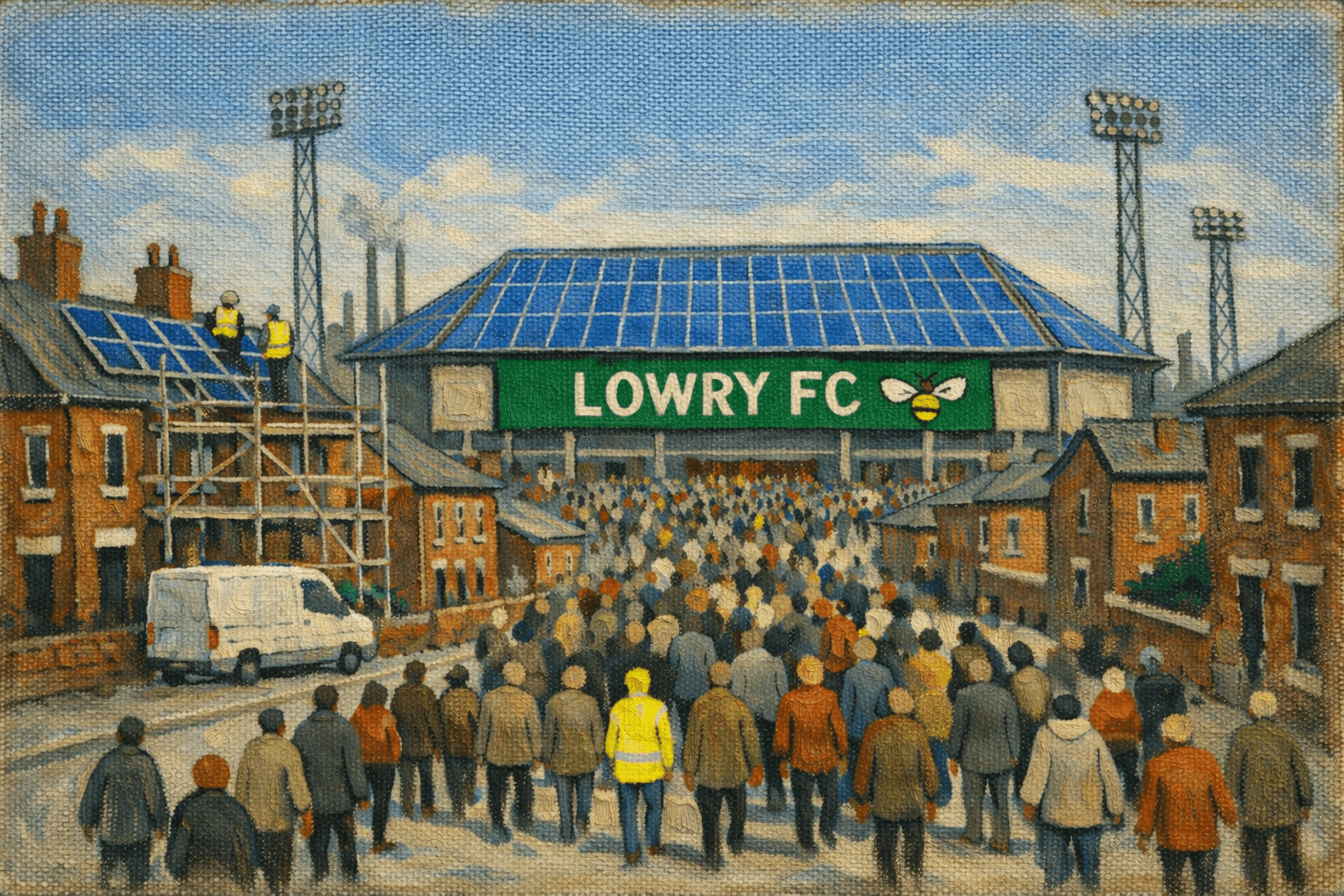
The FIT era expanded the colony.
The next era must strengthen the hive.