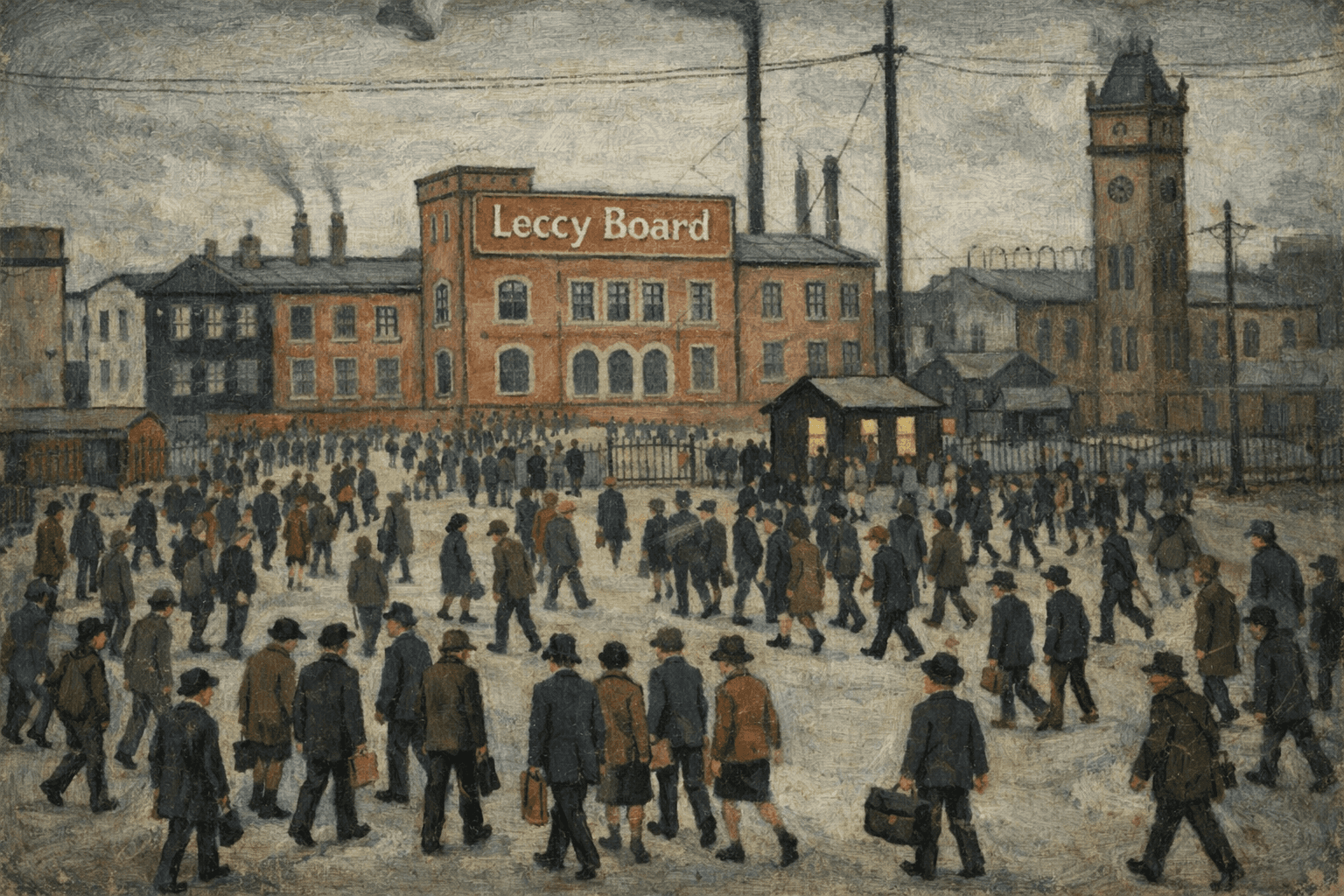
When people talk about the old electricity boards, the conversation tends to get tangled in politics. Nationalised versus privatised, public versus private, the romance of the past versus the pace of the present. But if you strip out the ideology, something quieter and far more practical emerges. The boards trained well not because they were nationalised, but because the entire environment they operated in made good training almost inevitable. The work was predictable, the assets were consistent, the responsibilities were unambiguous. The organisation owned the risk, the standards, the procedures and the long-term consequences. Because everything pointed in the same direction, training could be tightly aligned with reality.
That alignment created a kind of competence that deepened almost by accident. An apprentice could spend years learning the same circuits they would eventually maintain, the same switchgear they would later isolate, the same substations they would inspect on cold mornings in February. Training was not a separate activity from the work. It was simply the work, performed with guidance instead of authority. Because the system changed slowly, the training remained relevant for decades. This is not nostalgia; it is structure.
In the decentralised world, the conditions are entirely different. Every rooftop introduces its own design philosophy. Every inverter model arrives with quirks that may or may not be documented. Every contractor brings their own interpretation of “best practice.” Every O&M team inherits a different history, a different set of risks and a different quality of handover. You cannot build perfectly consistent training from perfectly inconsistent starting points. Yet the expectations placed on contractors continue to rise: deliver more generation, lower costs, better documentation, faster mobilisation, fewer failures and higher reliability across assets that might sit on a building for a quarter of a century.
It is remarkable, when you think about it, just how well contractors perform inside a system that was never designed to support them. They work across regions, technologies and client pressures in a way no apprentice of the old boards ever had to. They carry responsibility across an asset base far more varied than any distribution network. They move between installation and maintenance work, between construction and investigation, between design intent and on-the-day improvisation. They are asked to carry the reliability expectations of centralised energy while operating in the volatility of a competitive marketplace. They do so with an amount of grit, pride and professionalism that rarely receives the recognition it deserves.
One of the old system’s hidden strengths was that training was internal, it had to be. The boards carried the legal responsibility, the operational risk and the reputational consequences of every decision. They trained apprentices in wiring regulations, HV safety rules, isolation methods, fault diagnosis, switching discipline, asset history and the subtle quirks of local infrastructure. But more importantly, they trained judgment – the practical wisdom that only emerges from deep familiarity. Training was not just about competence, it was about inheritance. You learned the system so you could one day pass it on.
Today, much of the training ecosystem around decentralised energy is oriented toward compliance rather than mastery. Short courses, ticket-based qualifications, generic modules designed to cover broad principles rather than the lived reality of diagnosing faults across 100,000 different rooftop systems. There is nothing wrong with compliance training; it is necessary. But it is not sufficient. It does not transfer the depth of tacit judgement required when, years later, you are standing on a windy roof with a system no longer supported by its installer, a missing commissioning pack and an owner who just wants it safe and working.
Identity once anchored reliability. In the old world, to be authorised meant something. You felt responsible for your patch and the people who depended on it. You knew that if your installation was careless today, you might be the one called out to repair it ten years later and everyone in the depot knew it was one of yours to begin with. That kind of accountability cannot be replicated easily in a world where contractors follow the work rather than the network. Their environment is shaped by tenders, cashflow, growth targets, staff turnover, supply chain shocks and the practical reality of running a business in a sector that changes every six months. It is not that today’s workforce cares less. It is that the system no longer reinforces the behaviours that once formed naturally.
The question, then, is not why the old world trained better. The real question is how the new world trains differently and what it must evolve into if decentralised generation is to become truly reliable infrastructure rather than a series of isolated projects. We are not going back to nationalised training schools. We are not rebuilding forty-year careers inside the same depot. But we do need to recreate the outcomes the old world achieved: predictable competence, aligned behaviour, shared technical language, continuity that survives turnover and learning that travels rather than evaporates.
None of this requires contractors to imitate DNOs. It simply requires giving contractors the structural support DNOs once benefited from. The decentralised system depends on them, yet too often leaves them to operate without the methods, memory structures or training pathways that make long-term reliability possible. Training must evolve from a certificate to a scaffold, from a requirement to a foundation.
The future of decentralised energy will not be determined by technology alone. It will be determined by whether we build a training architecture that fits the reality contractors face every day: variable environments, incomplete histories, inherited risks and customers who still expect the lights to stay on. The rooftop revolution will not fail because panels stop working; it will fail if we do not equip the workforce with the tools and frameworks that allow competence to compound despite the volatility around it.
That is the next frontier – not recreating the boards but recreating the supportive scaffolding they once provided. The energy transition does not need the past back. But it does need to understand why the past worked and how to build modern equivalents that empower the people who now carry the responsibility once held by entire regional utilities.
The old world produced reliability through structure.
The new world must produce reliability through design.
The people who most deserve that structure are the ones doing the work on the roofs.